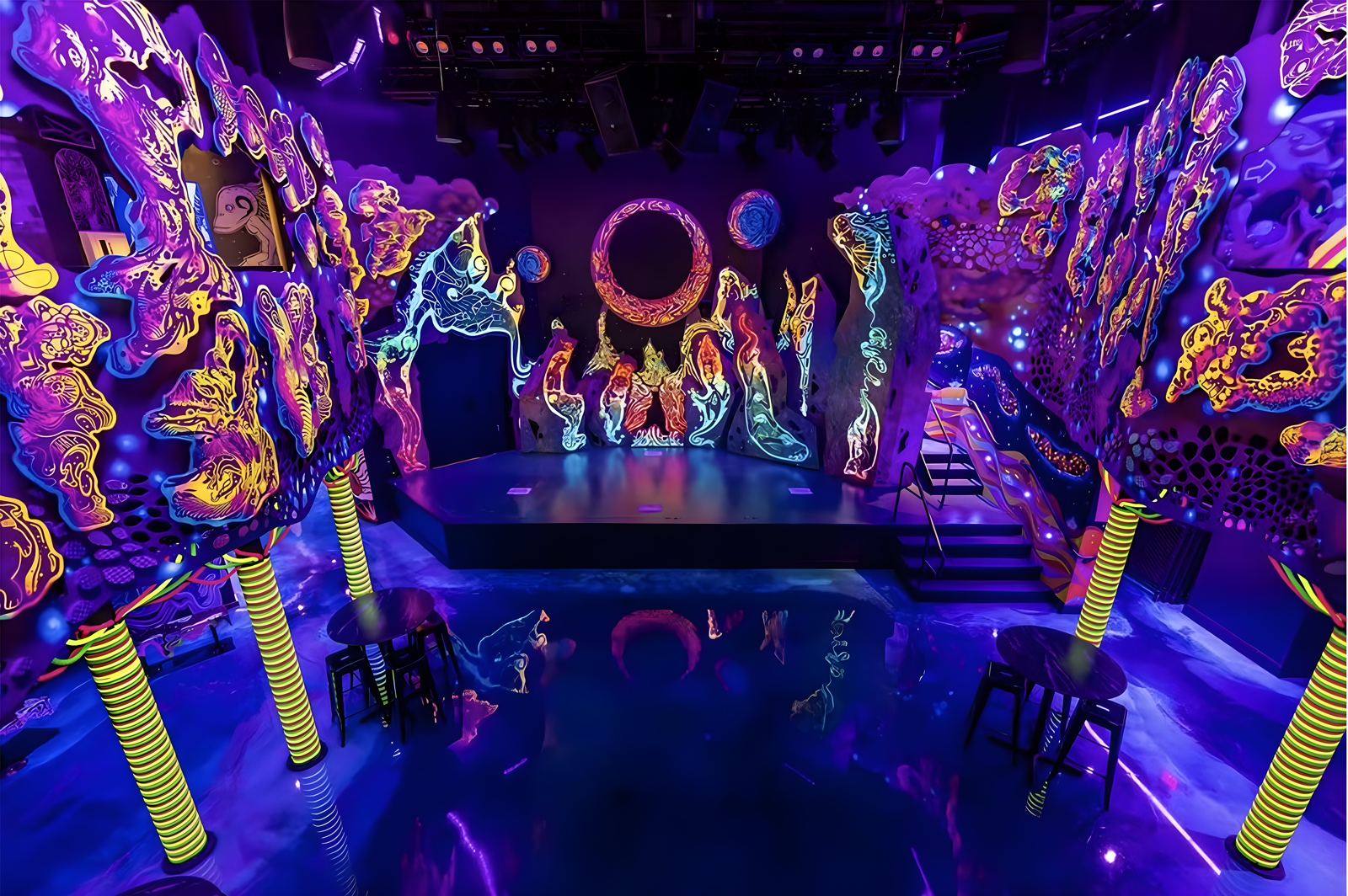
Track A
Products and experiences
For
- Product and R&D teams
- Toy and game makers
- Attraction and experience designers
Nexus Lab Space takes one hard challenge, for a product or a community, and looks to nature for the answer, often in the most unlikely places. Then we prototype it, test it in the real world, and, depending on the strategy, hand it off as a product or experience ready to run, or stay on for a longer-term partnership as iterations evolve.
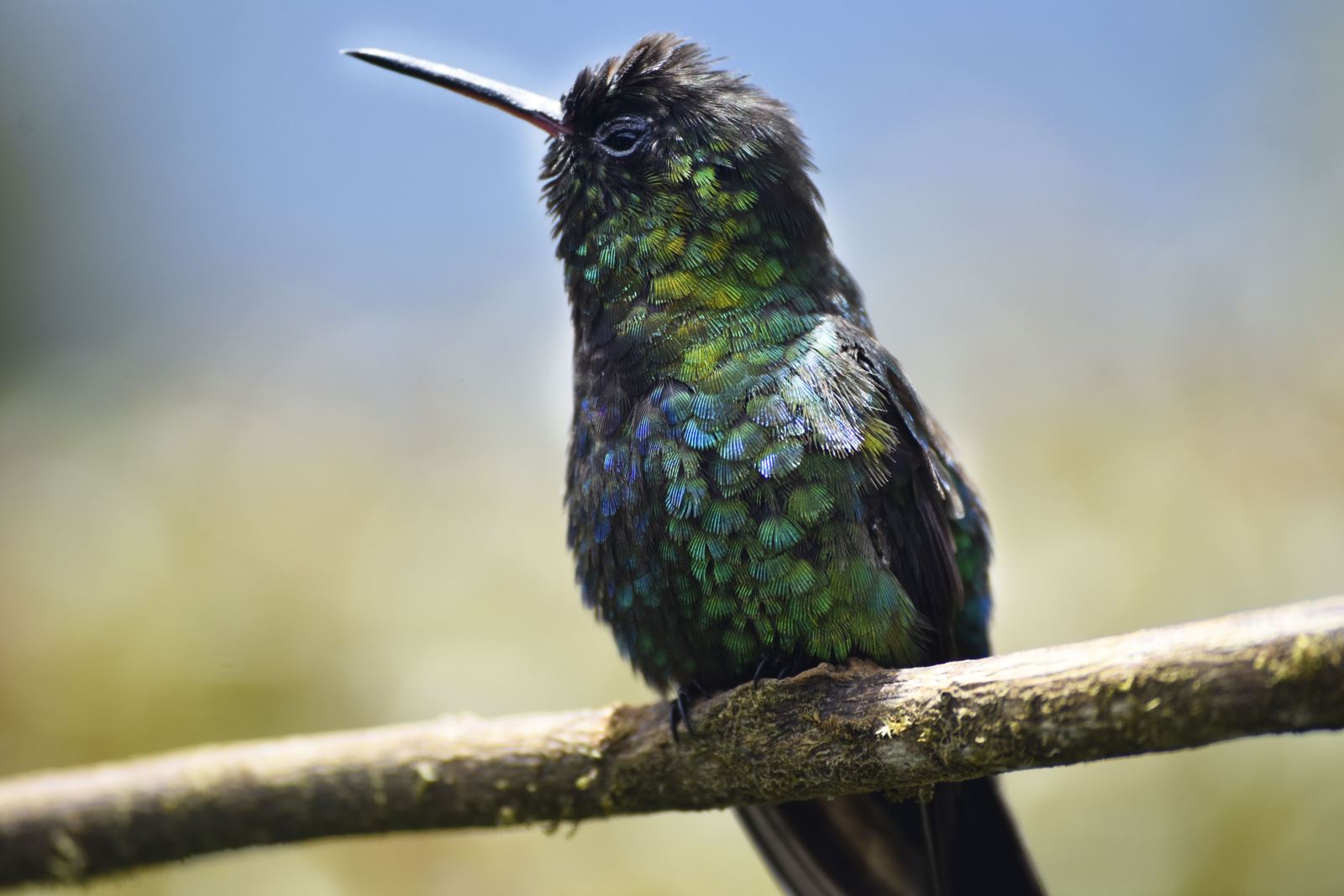 01a · Observed
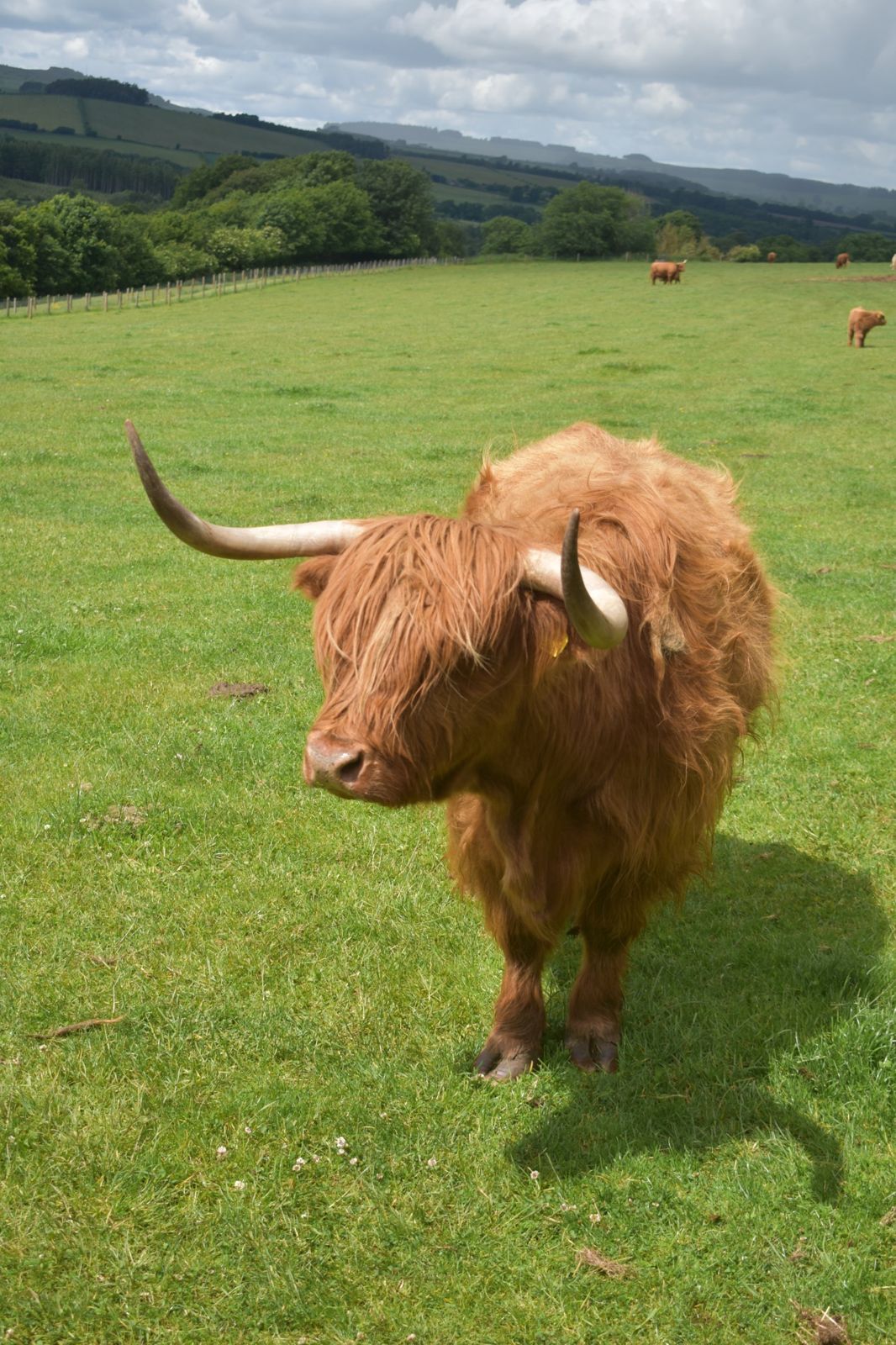 02a · Observed
Whether the challenge is a product or a social system, the work moves through the same four phases, from question to tested system.
For
For
Frame the system, ask nature, prototype, and test in context.
What does this really need to do, and for whom?
No one today is short on data. What is rare is the right question. This phase is what sets Nexus Lab Space apart. Before we ideate anything, we look at your system in context to find the points of tension and the leverage points, and make sure we are asking the right question with the right approach.
We restate your challenge as a function (shed heat, hold attention, move people, share resources) and map the system around it: who is involved, where the feedback loops are, and which constraints are fixed. A precise frame is what makes the biology useful later.
Kidlin's law:
When you write down a problem clearly, the matter is half solved.
Which organisms and ecosystems already do this well?
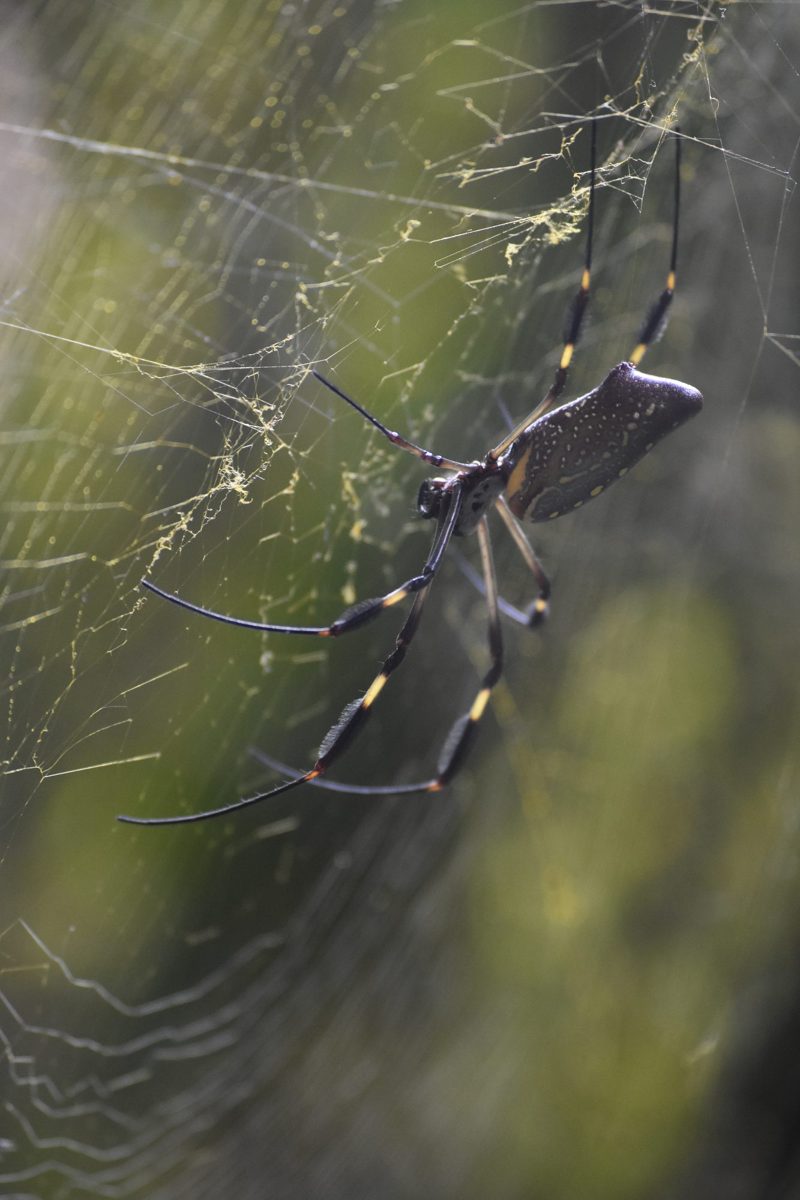
The Nexus team goes searching for biological examples by function. Then we go look: field observation, macro photography, and data where it helps. What comes back to you is a lineup of the biological strategies we found, each one traced to its scientific source. The key is that we also abstract those insights into simple design principles your team can apply without a biology degree.
Janine Benyus, Biomimicry (1997):
“Nature as model, measure, and mentor.”
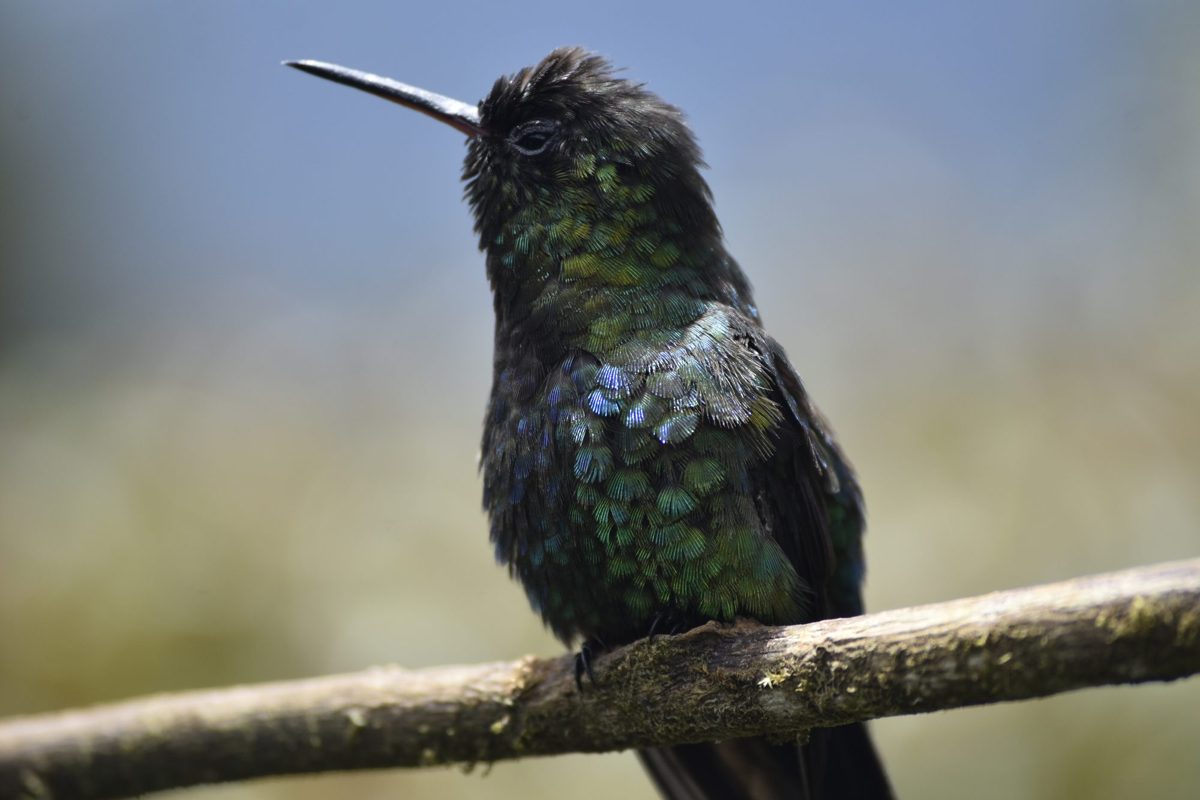
What is the fastest physical version we can learn from?
Principles become things. Depending on the challenge that means a bench rig, a playable game, a material sample, or a room-scale experience. Building early exposes tolerances and human behavior that slides and simulations miss.
A saying at IDEO:
“If a picture is worth a thousand words, a prototype is worth a thousand meetings.”
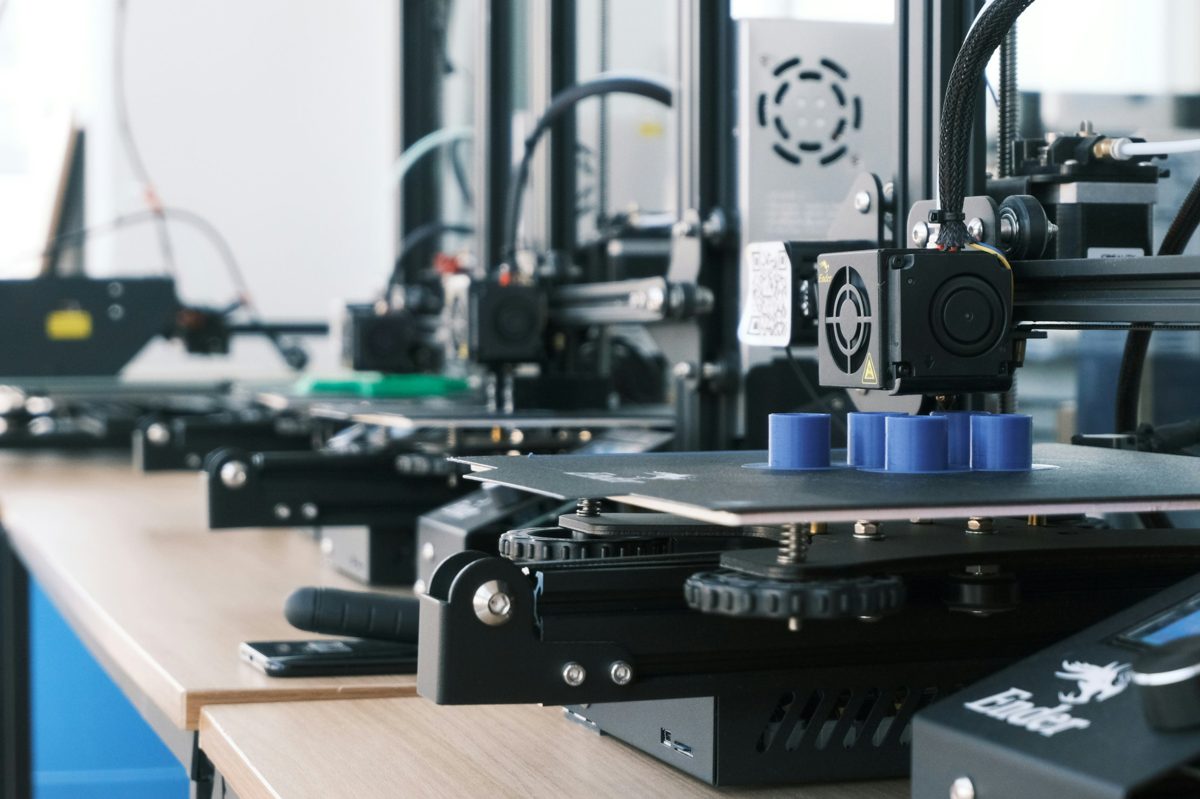
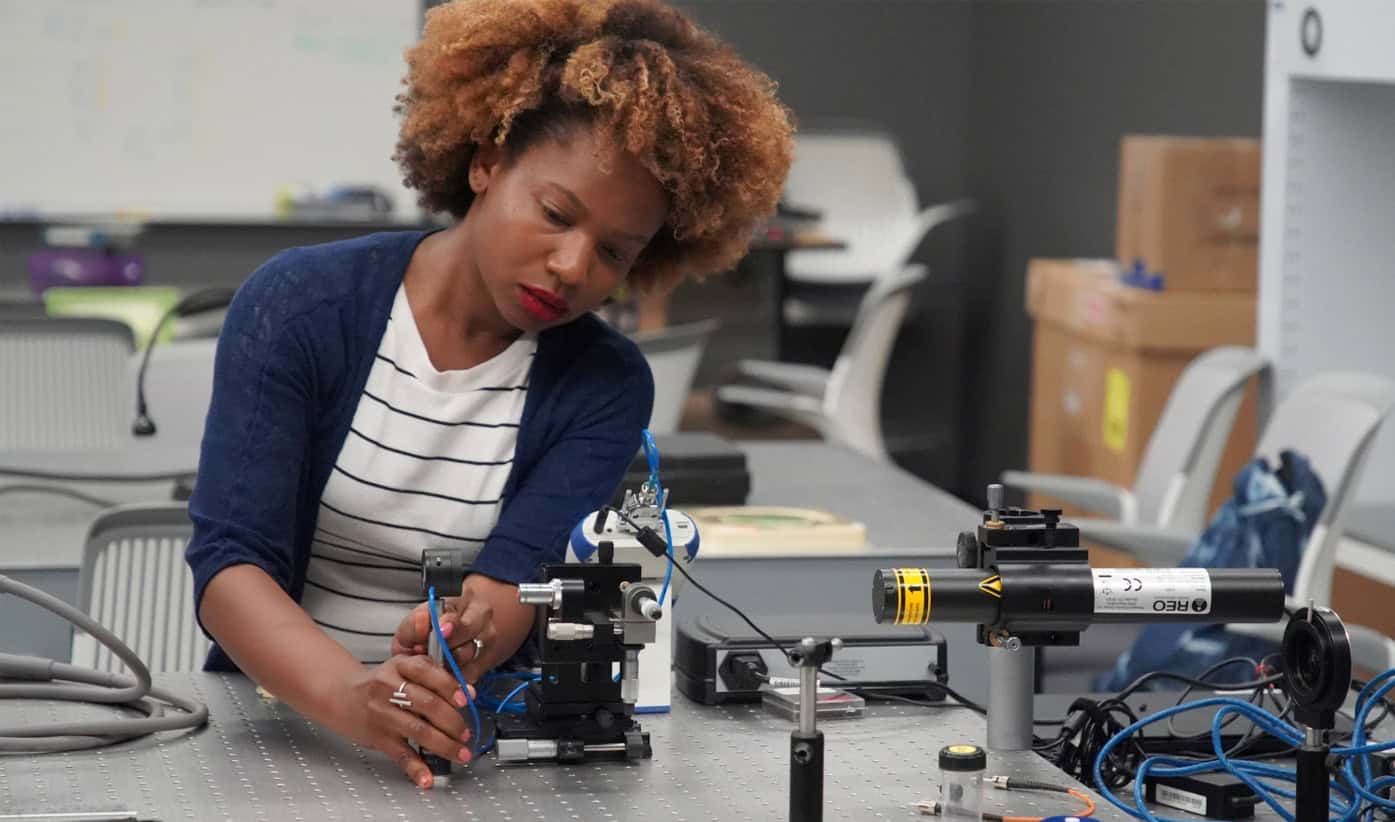
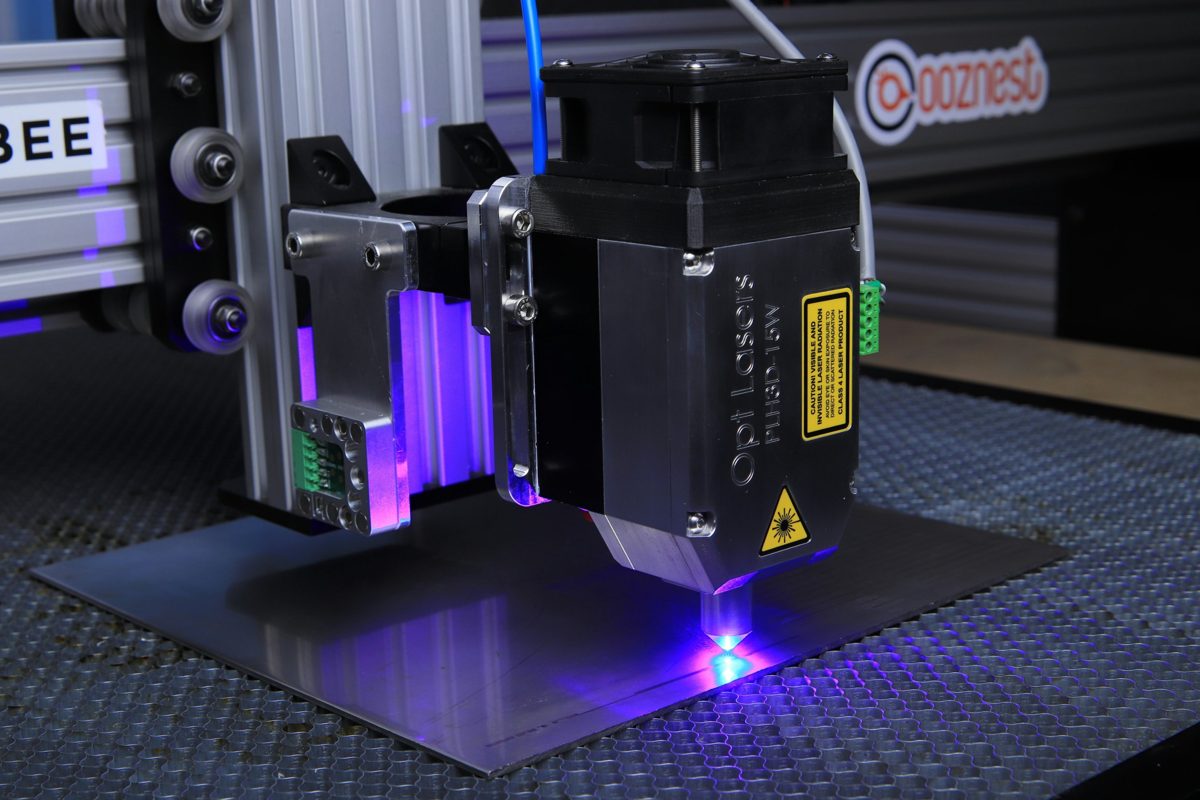
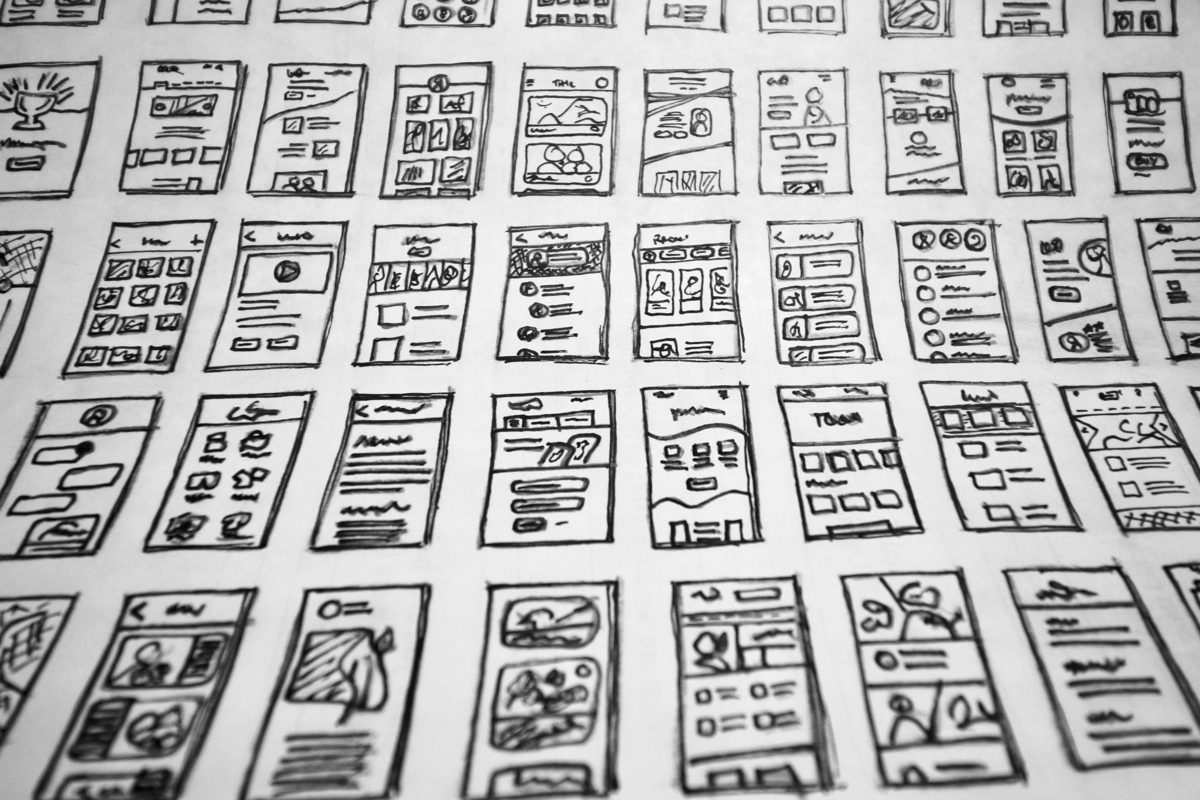
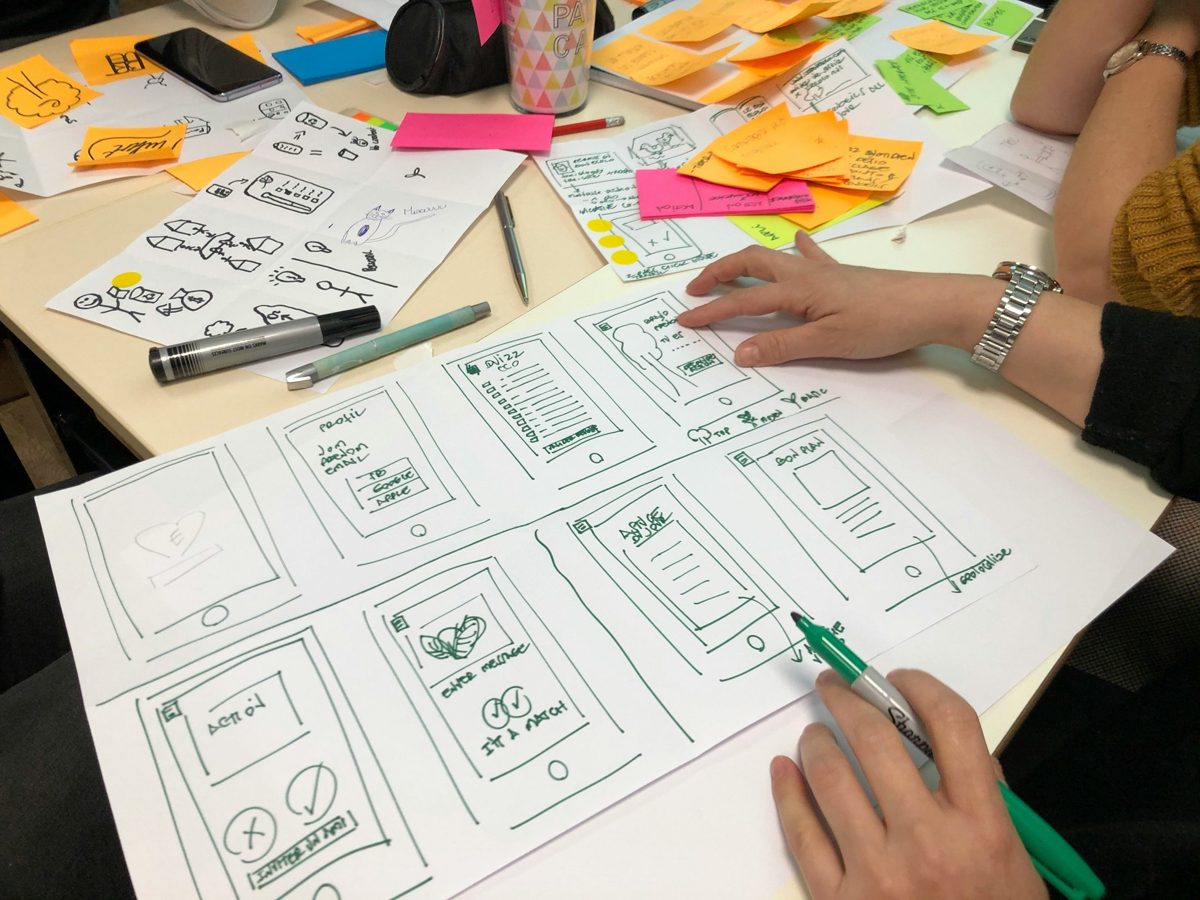
Something you can hold. A quick 3D print, a working electronics build, a material sample, or a playable tabletop version. If it is a product, it will be in your hands.
Something you can see. An easy-to-read visual or dashboard that shows the leverage points, where to iterate, and the data you need to track.
When a challenge calls for it, we build custom AI tool sets and trackable dashboards, so your data works toward the answer instead of piling up.
Does it work where it has to live?
We take the prototype into the real setting: a classroom, a street, a factory floor, a festival. We measure against the criteria from Phase 01 and report what the data says, including when it disagrees with the original idea.
A product in real hands. Students, players or customers use it while we watch.
A field test on site. We measure where nature does the work, like water flow across a site.
A new way of working. A process or team structure piloted across several groups at once.
A pilot where people gather. A street, plaza or festival, watching how people move and respond.
A small first audience. An exhibit or experience opened to a few visitors before the full opening.
A tool in daily use. Staff try the dashboard or AI tool, or we check a model against past data.
A controlled stress test. Durability and materials tested before anything goes into the field.
Who keeps this alive after we leave?
Healthy ecosystems do not depend on one species. We package the work so your team or community can build, run, and adapt it: specifications, facilitation guides, and training. What we learned feeds a shared library for your next challenge.
What needs to change as the system grows?
Social systems keep changing after a pilot, so some partnerships should not end at a handoff. Nexus Lab Space stays on under a longer agreement, often one to five years, as the outside eye. From a zoomed-out view we watch how the system responds, find the leverage points, and guide each round of iteration with your team.
You don't need to learn every step at once. Peel back one idea at a time, at your own pace.
Biomimicry, explained one onion layer at a time.
Life on planet Earth has spent 3.8 billion years evolving ways to survive and thrive that are efficient, renewable, and fit for their context. Many of the challenges we face in design, sustainability, relations, communications and more have already been solved somewhere in the natural world.
Instead of copying a shape, as biophilic design often does, we ask a function question: how does nature keep cool, store energy, or move water?
Not "make it look like a leaf," but "how does a leaf shed water?"
A strategy works because of its conditions: climate, materials, neighbors. Matching the conditions matters as much as matching the problem.
Desert plants solve heat differently than rainforest plants.
Look past the organism to the mechanism that actually does the work.
The hummingbird's green comes from layered structural color, not pigment.
Describe the strategy in plain terms any team can use, no biology degree required.
A gecko's grip, as a principle: many tiny contacts add up to a strong hold that still lets go easily.
The most useful answers often come from where no one thought to look: a goose joining a flock, the skin of a desert leaf, the feathers of a hummingbird. Finding those connections, and making them work, is what Nexus Lab Space does.
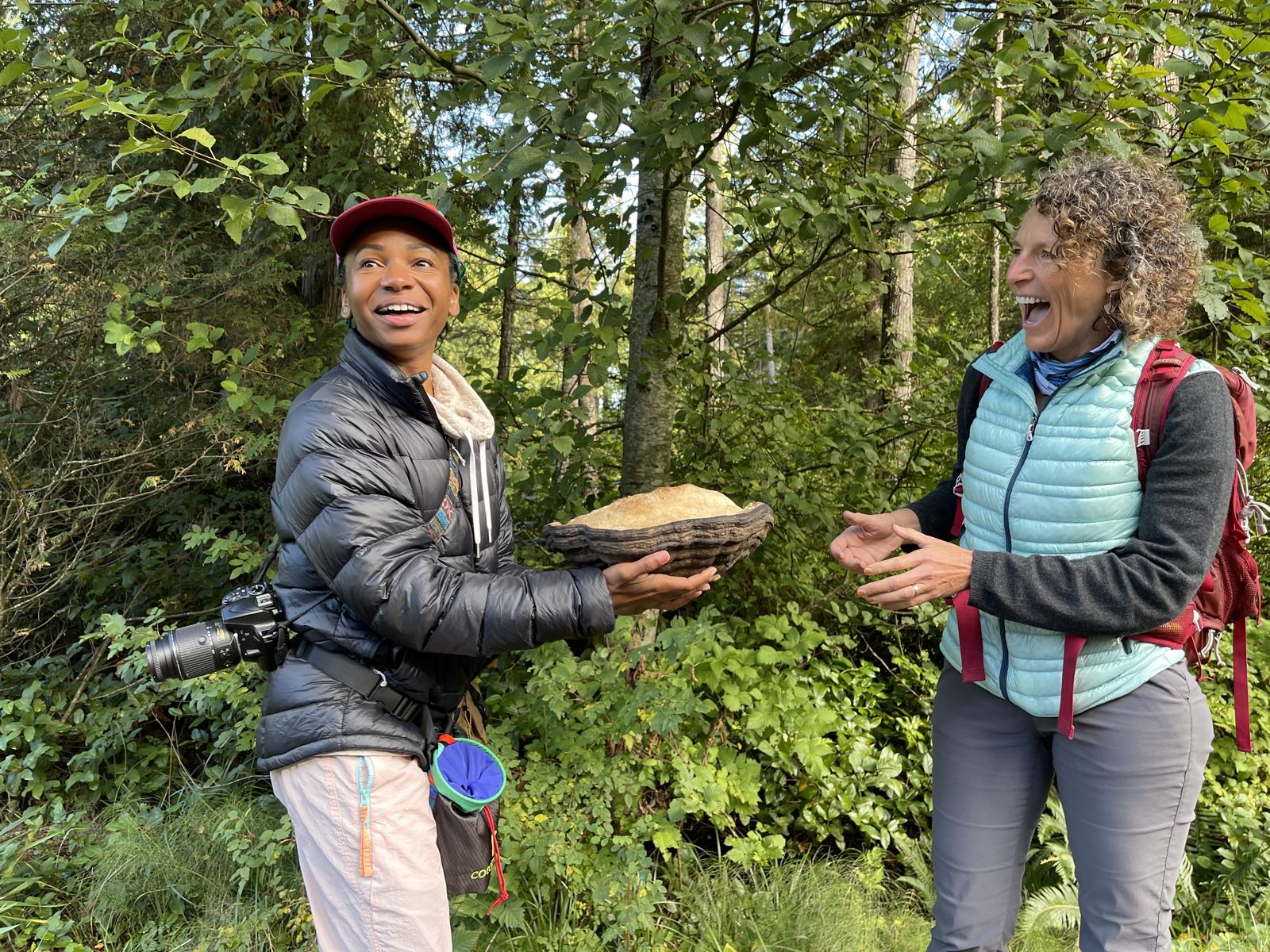
We build in the lab. We learn in open space, from the examples right outside our door. Bring biomimicry to your group through a talk, a hands-on workshop, or a guided nature hike. No challenge brief needed, just curiosity.
For
The same process, compressed into a session. We frame the question with your group, ask nature together, then explore it hands-on.
A presentation, a hands-on workshop, or out on a hike. For all ages.
Studio work where nature, often from an unexpected corner, became something people can use: for cities, for kids learning to read the natural world, and for a community planning for the next storm.
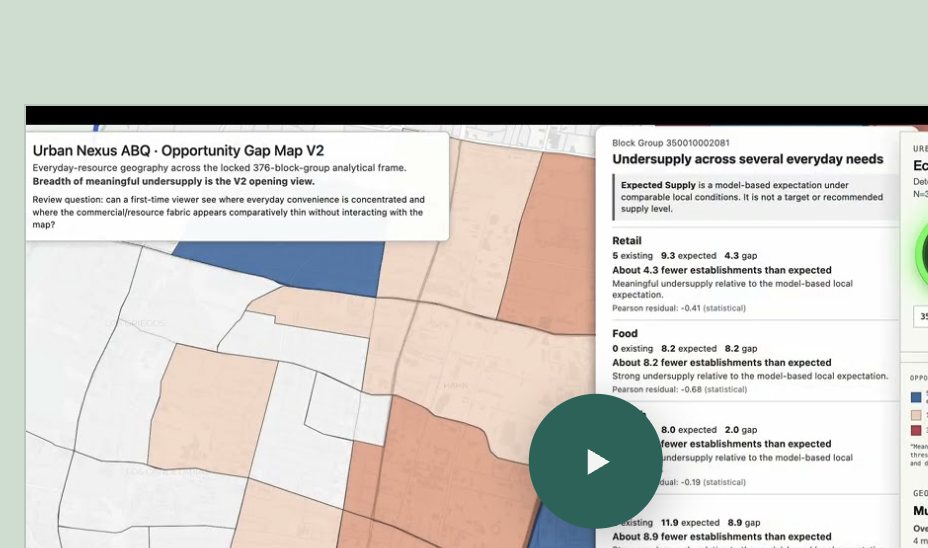 Phase 01 · FrameUrban NexusA spatial evidence platform that shows civic teams where resources are thin before they decide where to act.
A spatial evidence platform that helps civic teams see how resources are distributed across a city before deciding where to act.
Press play to watch the demo reel here.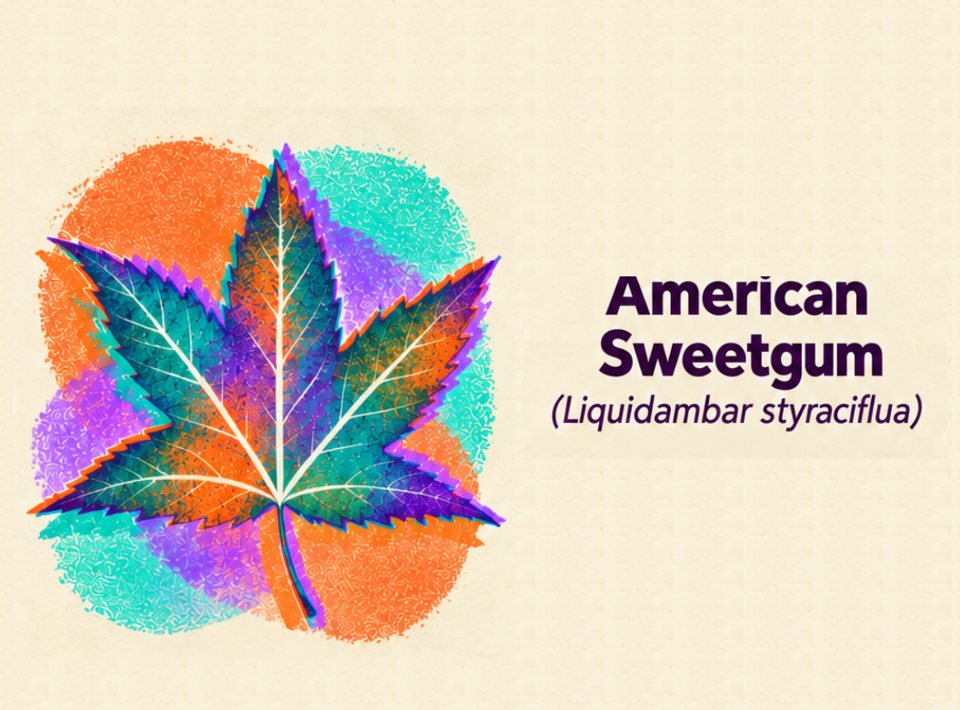 Phase 03 · PrototypeLeafQuestA game that teaches kids systems design and evolution, starting with something small enough to hold: a leaf.
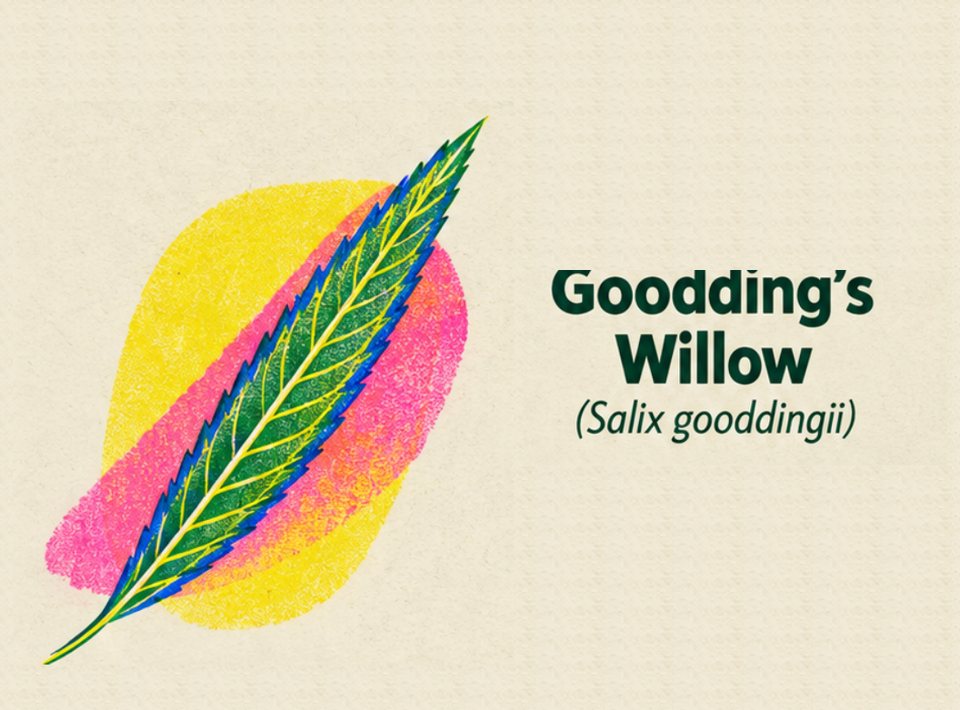
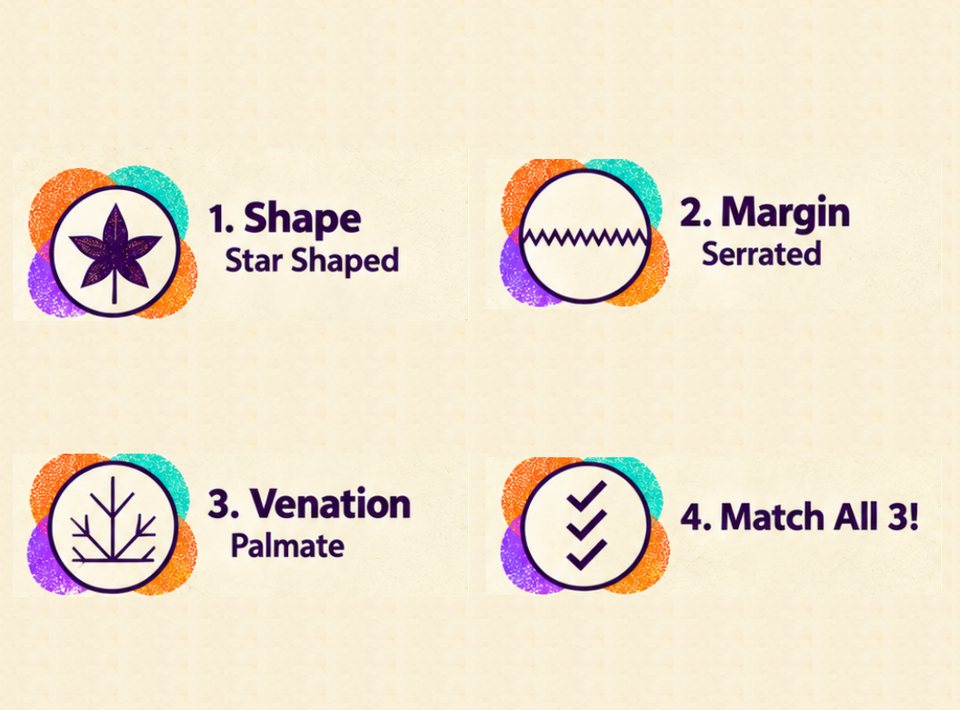
LeafQuest teaches kids systems design and evolution through something small and accessible: a leaf. By reading its shape, margin, and venation, players start to see why leaves in different ecosystems evolved the way they did, and how form follows function.
Kids collect ecosystem decks like the Eastern temperate forest and Southwestern riparian corridors, then mix and match decks during play to compare how different places shape the plants that live there.
NFC-enabled play. Two provisional patents pending. The play hardware is still in development, shown here as a 3D concept model alongside the card decks.
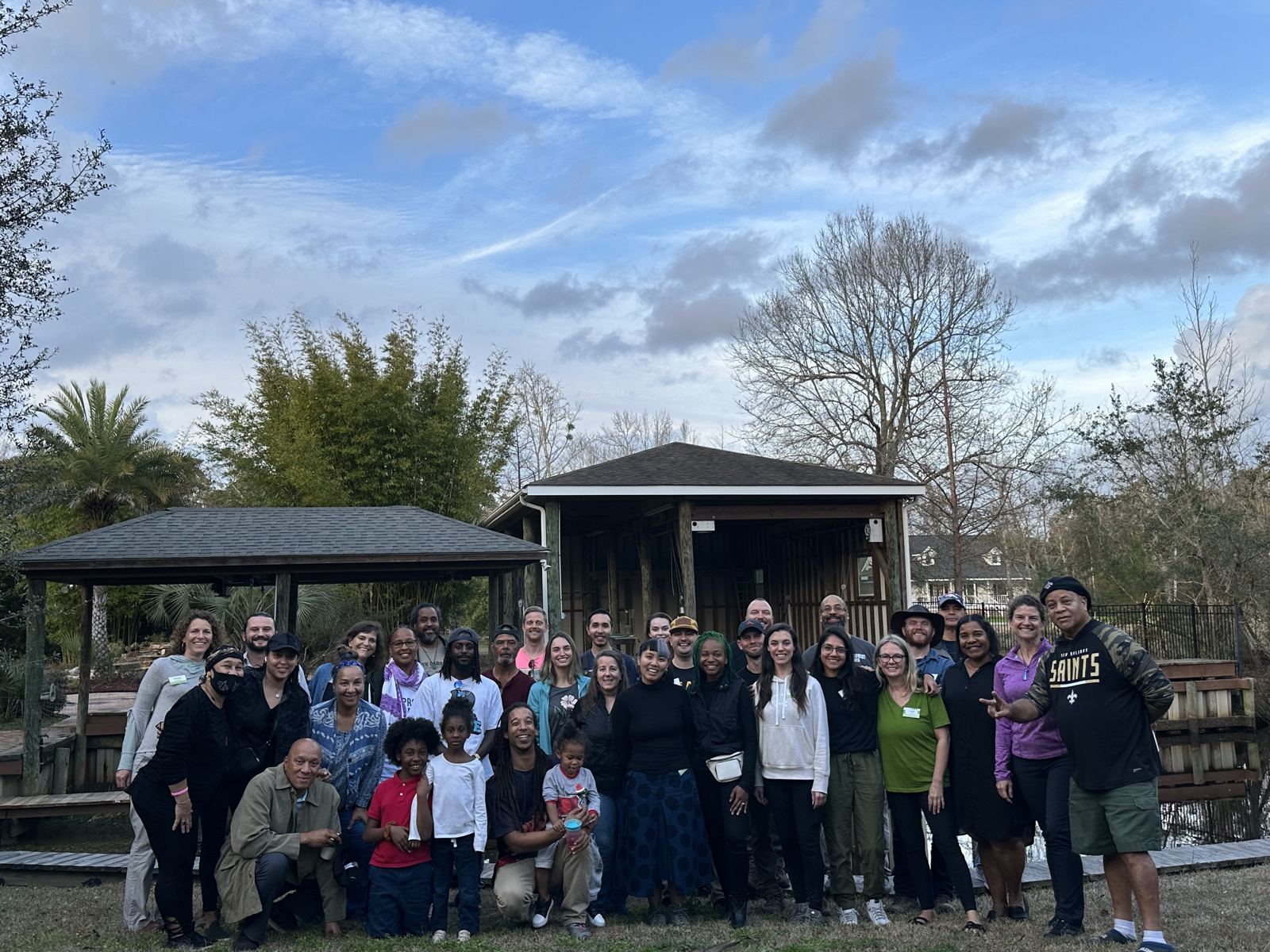 Phase 01 to 02 · Frame and ask natureStorm Fuel · Slidell, LouisianaWhat thrives in a hurricane? Mold, and its strategy for storing energy became a plan for a community biofuel center.
When a hurricane hits, fuel deliveries stop, and generators, boats, and chainsaws go quiet exactly when a community needs them. We asked what thrives in a hurricane. The answer was mold, and its strategy for storing energy became a plan for a community biofuel center.
How it turns storm debris into stored energy
lipid droplets glycogen enzymes
Turn the storm's waste into the storm's fuel, and store it close to home.
Book studies, field studies and essays, published with their data and their corrections. This is where we practice looking closely, in the open.
Five Canada geese cross open water to join a foraging group. Their careful arrival shows what joining costs, and why human permeable communities make belonging so much harder than it needs to be.
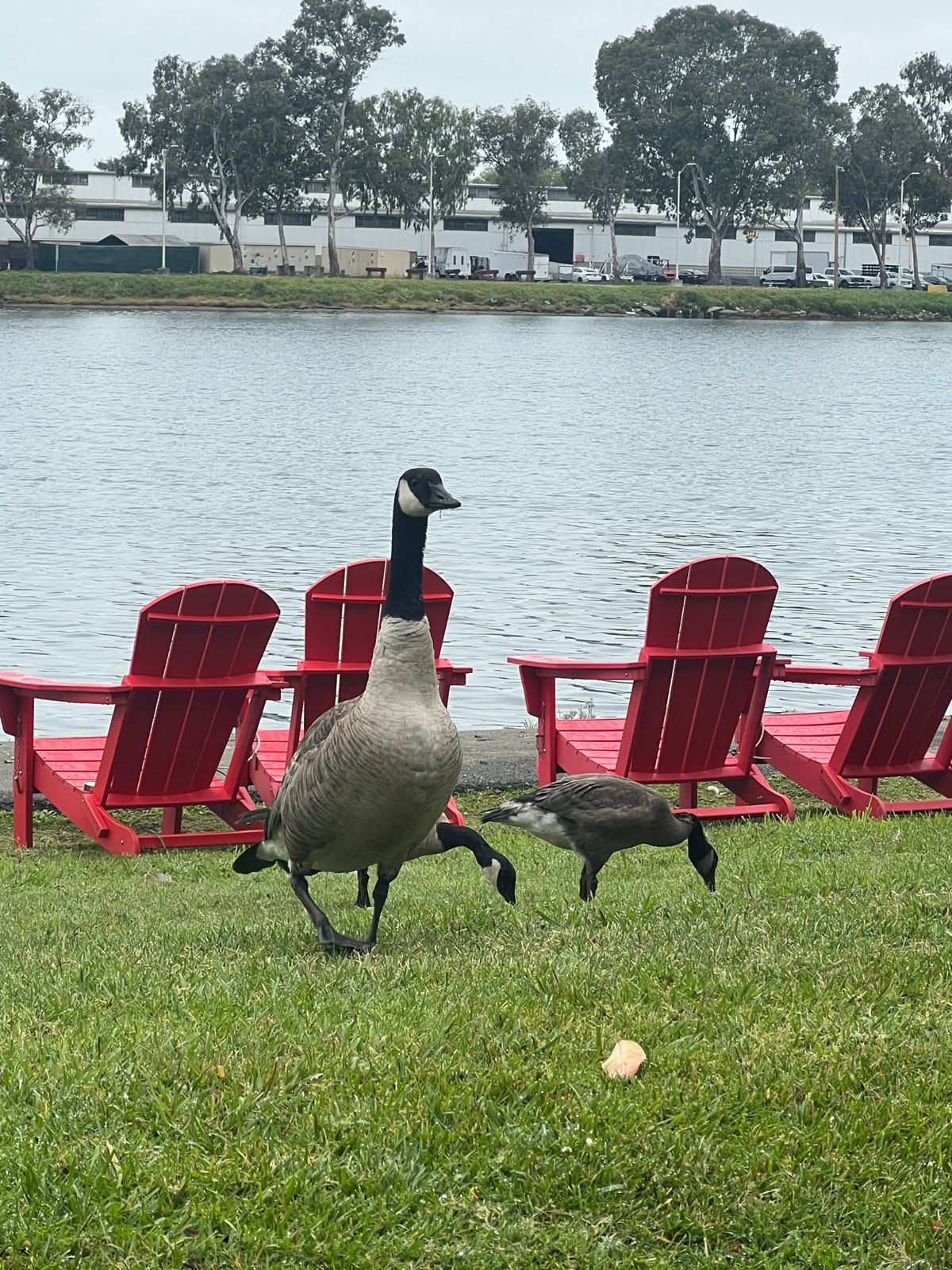
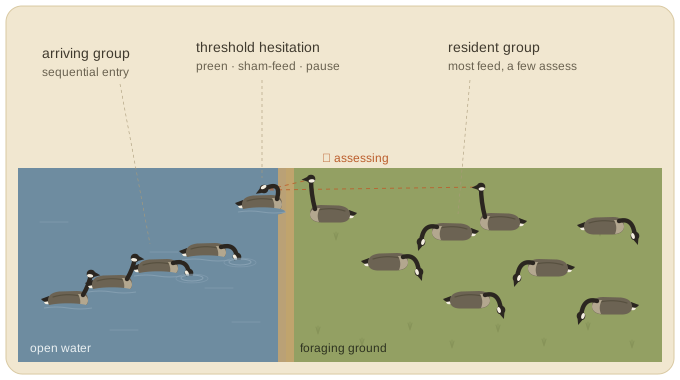
Field video from the morning of the observation. Press play to watch it here.
A seasonal habitat model for the house sparrow across Albuquerque, built from satellite imagery and citizen-science records.
One day, one bird, eight satellite lenses. A seasonal habitat model for the house sparrow in Albuquerque, where fixing one quiet assumption about absence points reversed the result, and the honest answer turned out to be two behaviors instead of one.
GBIF and eBird hold thousands of dated house sparrow records for the Albuquerque basin. Train on the pile and you get a map that looks authoritative and means very little.
Every point is a bird being somewhere and a human being there with a phone.
That isn't a footnote. It's the central methodological problem of the field, and version one walked straight into it.
Two behaviors wearing one habitat map. Average them together and both disappear. Measured against places birders actually surveyed, the thermal association barely moves all year. Vegetation does the opposite.
| Effect size | Winter | Spring | Summer | Fall |
|---|---|---|---|---|
| Warmth | +0.36 | +0.42 | +0.28 | +0.35 |
| Greenness | +0.41 | −0.19 | +0.08 | +0.06 |
| Development | +0.56 | +0.62 | +0.18 | +0.50 |
| Pavement | +0.27 | +0.61 | 0.00 | +0.26 |
Positive means sparrows sit above the surveyed background. Greenness is the only row that reverses.
In a high-desert winter the only green is irrigated or evergreen, so it's scarce and worth competing for. By spring the whole basin greens up, green stops distinguishing anywhere from anywhere, and the signal dissolves.
Summer flattens everything else, and pavement lands at exactly zero. For three months the sparrows are nearly indistinguishable from every other bird in town, except that they're still in the warmer places.
The first answer was a map of birdwatchers. The first environmental layers were placeholder math. The output rendered as a perfect radial ripple, clean rings spreading from the city center. Sparrows do not live in concentric rings. The model had faithfully learned my placeholder and reported it back as ecology.
The second nearly got published. Absence points were scattered at random, which sounds neutral and isn't: random points land on unsurveyed desert, so the model could win by learning where birders go. Drawing background from other species' actual records instead:
| Effect size | Random | Target-group |
|---|---|---|
| Land surface temp | −0.32 | +0.35 |
| NDVI greenness | +0.39 | +0.09 |
| Built density | +0.61 | +0.47 |
| Impervious | +0.41 | +0.29 |
Sparrow values never moved. The background did: unsurveyed desert runs 2°C hotter than places people go.
Temperature reversed sign. A confident vegetation finding collapsed to nothing. Nothing in the training loop flagged either mistake. Domain knowledge isn't a complement to modeling; it's the error-detection layer.
Summer AUC is 0.630 and nearly every driver flattens to zero. Either the birds genuinely disperse after breeding, or three months of peak birding saturate the map. Effort covariates from complete eBird checklists would separate those.
House sparrow is a generalist commensal. The same pipeline on a piñon-juniper specialist, compared side by side, turns one map into a finding about which spectral lens each species loads onto.
If a city bird tracks the irrigated, shaded fraction of the built environment, a suitability surface is also a map of where the city buffers its own heat, and its inverse marks the blocks where people suffer in July. That's a biomimicry brief hiding inside a species model.
Skills applied Sampling bias correction · feature interpretation · evaluation judgment · reproducible experiments · pipeline staging · automated diagnostics. Python, scikit-learn, Google Earth Engine, Sentinel-2, Landsat 8, NLCD, GBIF and eBird APIs, Folium.
Four desert species that all look fuzzy to the eye turn out to use very different surface structures under the macro lens.
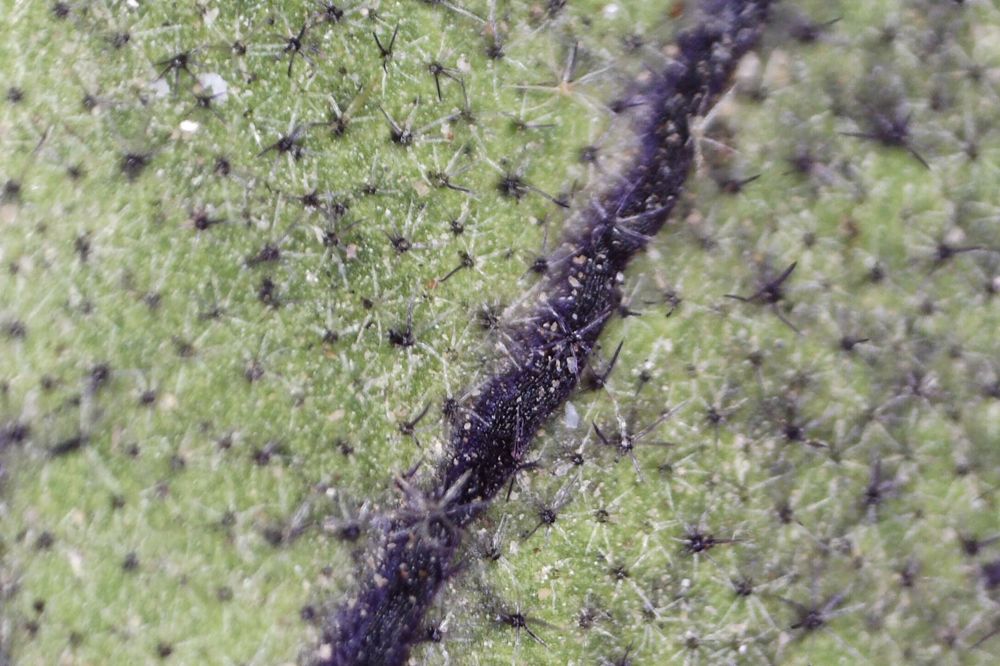
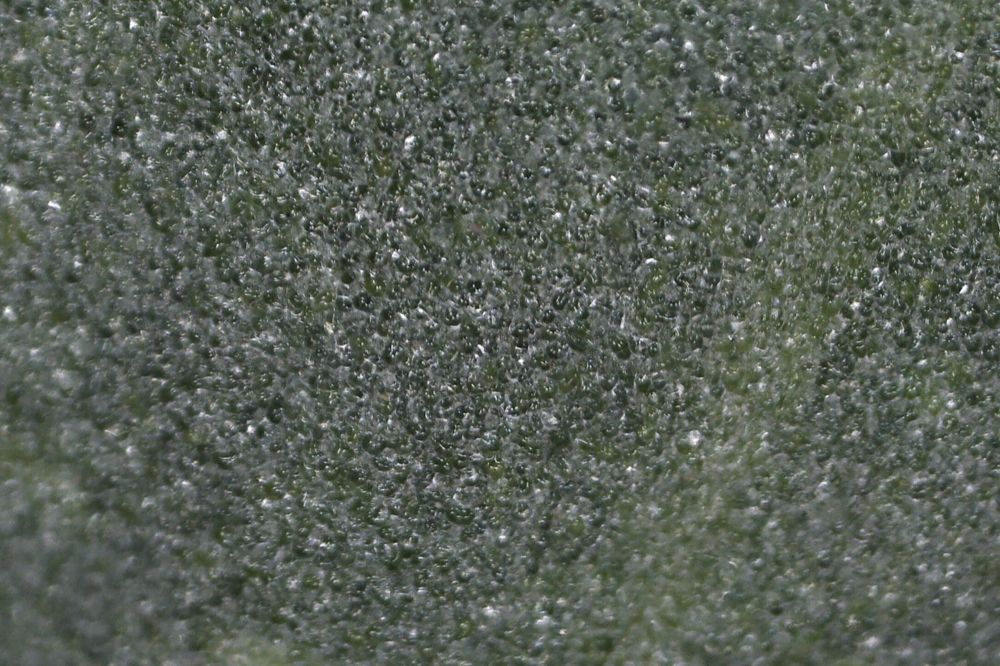
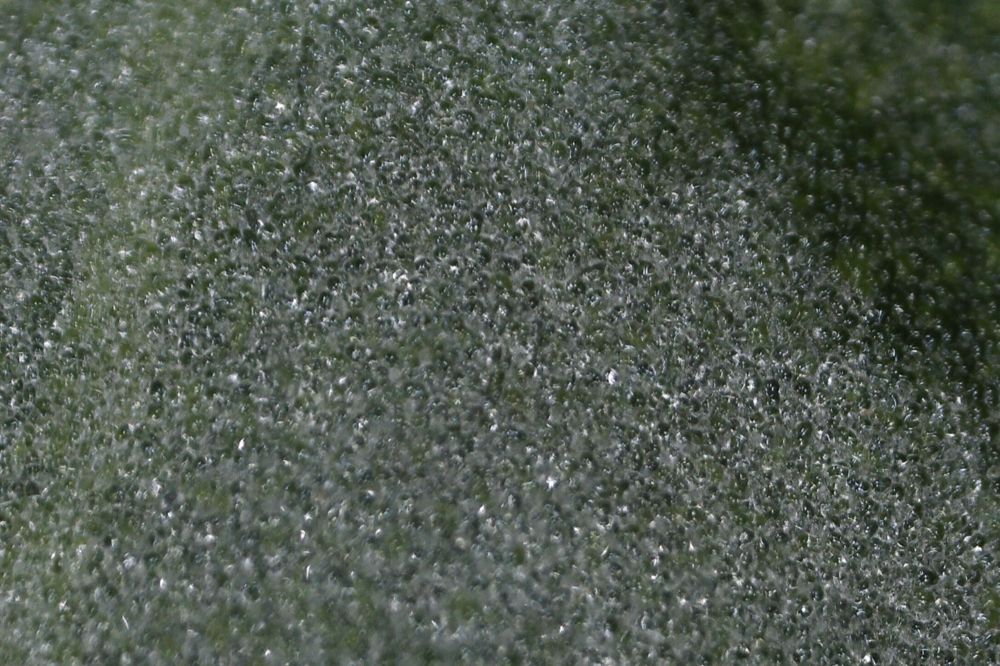
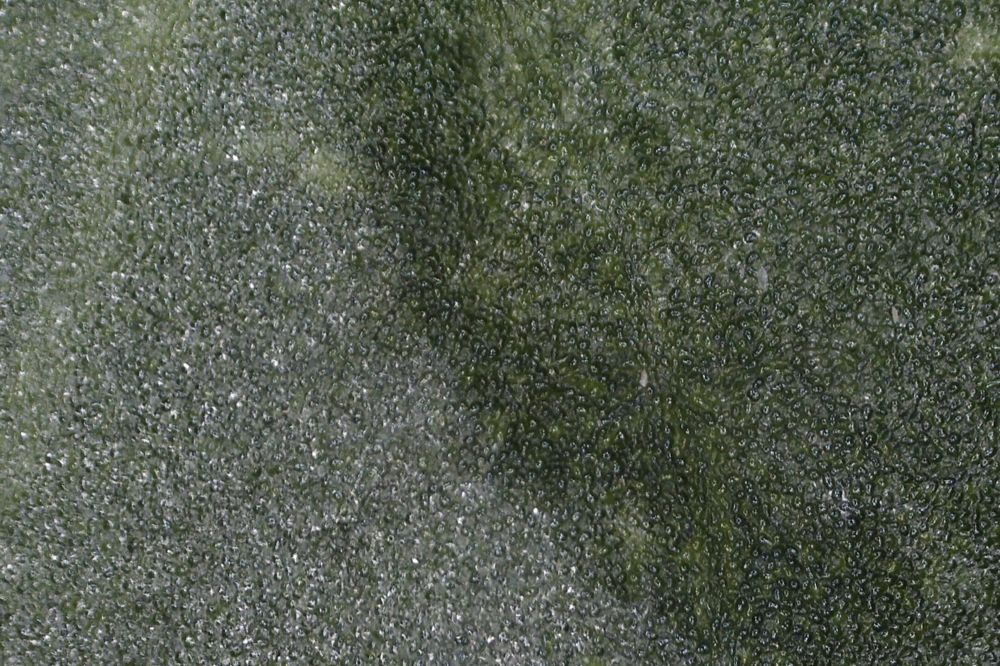
A macro lens, a kitchen counter, and four plants that all read as "fuzzy" or "rough" from arm's length. At working magnification they turn out to be four unrelated pieces of engineering, and the one I was most confident about, I identified wrong twice.
A desert shrub, a cultivated crop, a prostrate succulent, and an annual grass. Four growth habits, three families, one shared adjective the moment you touch them.
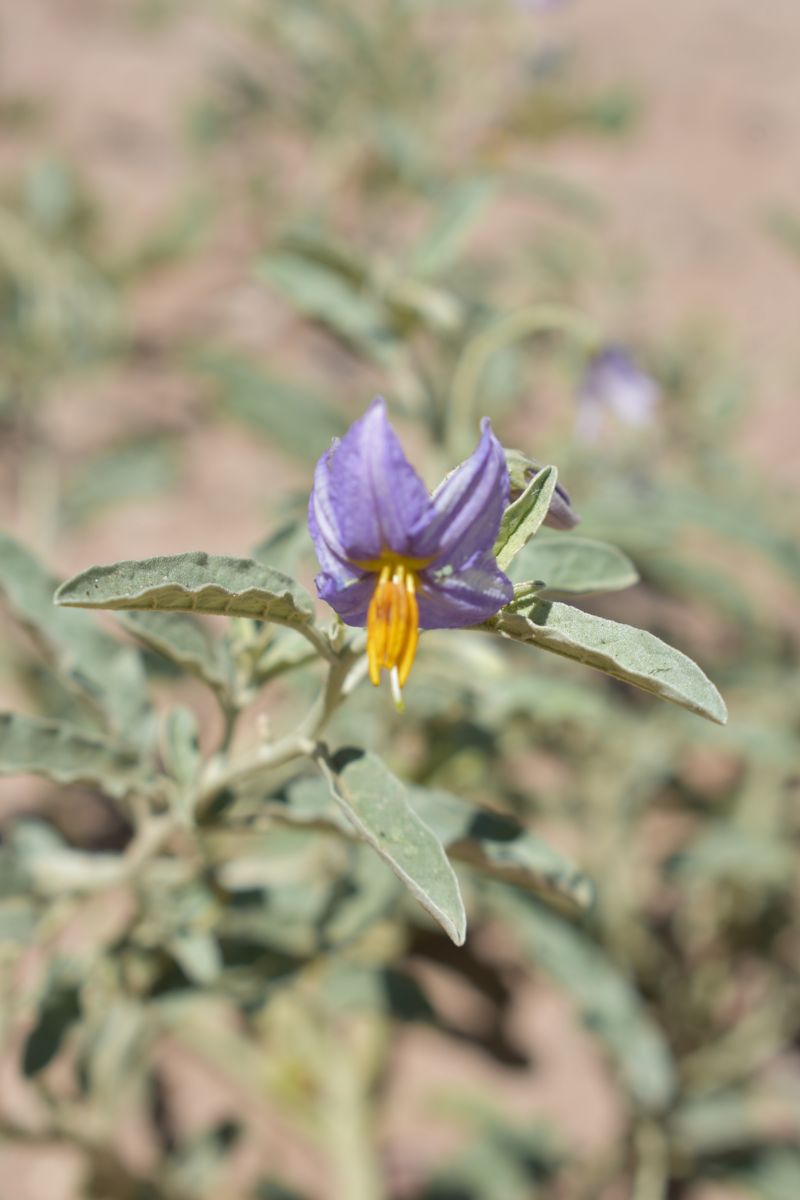
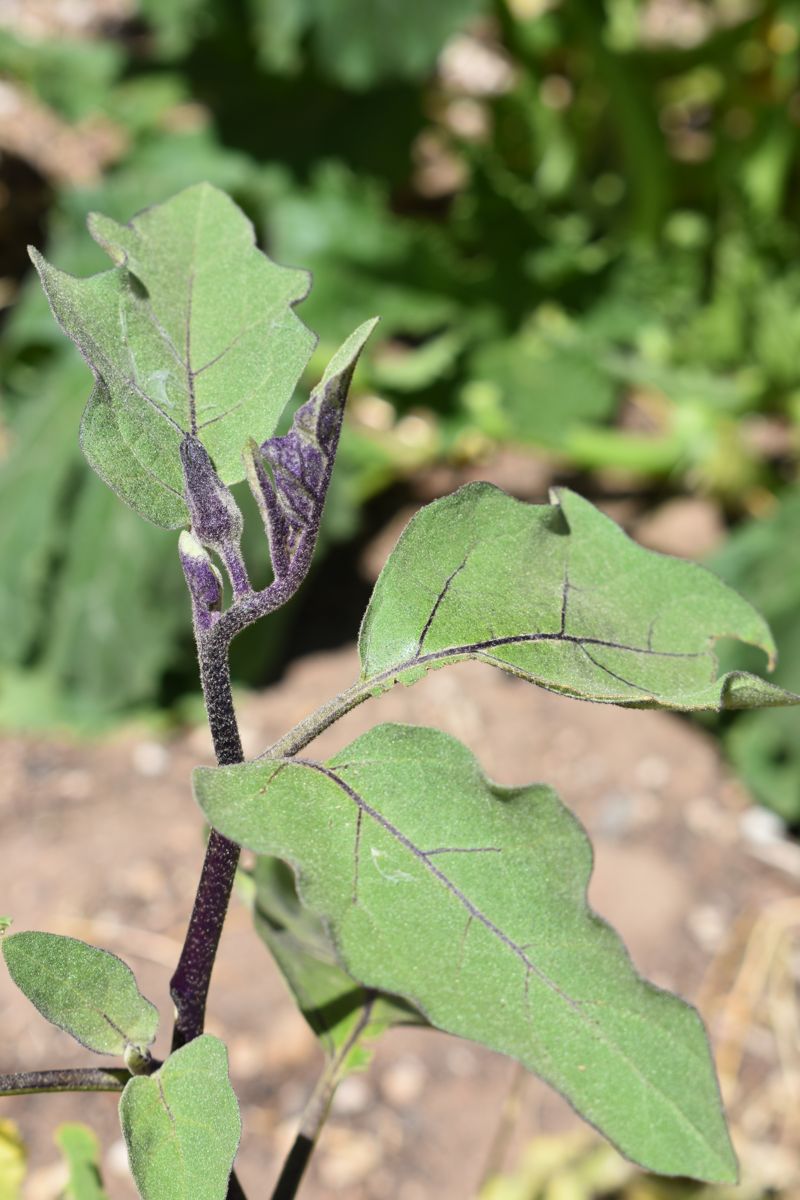
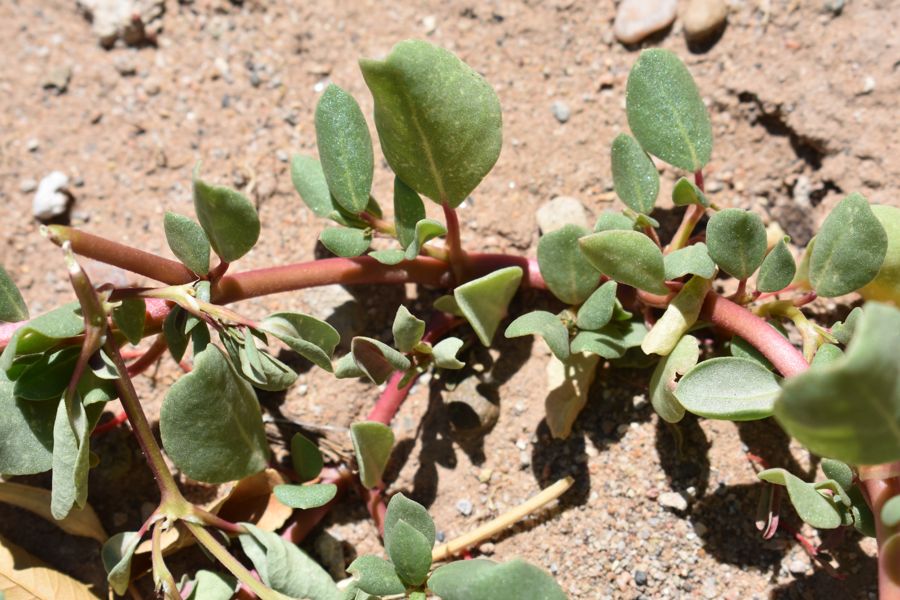
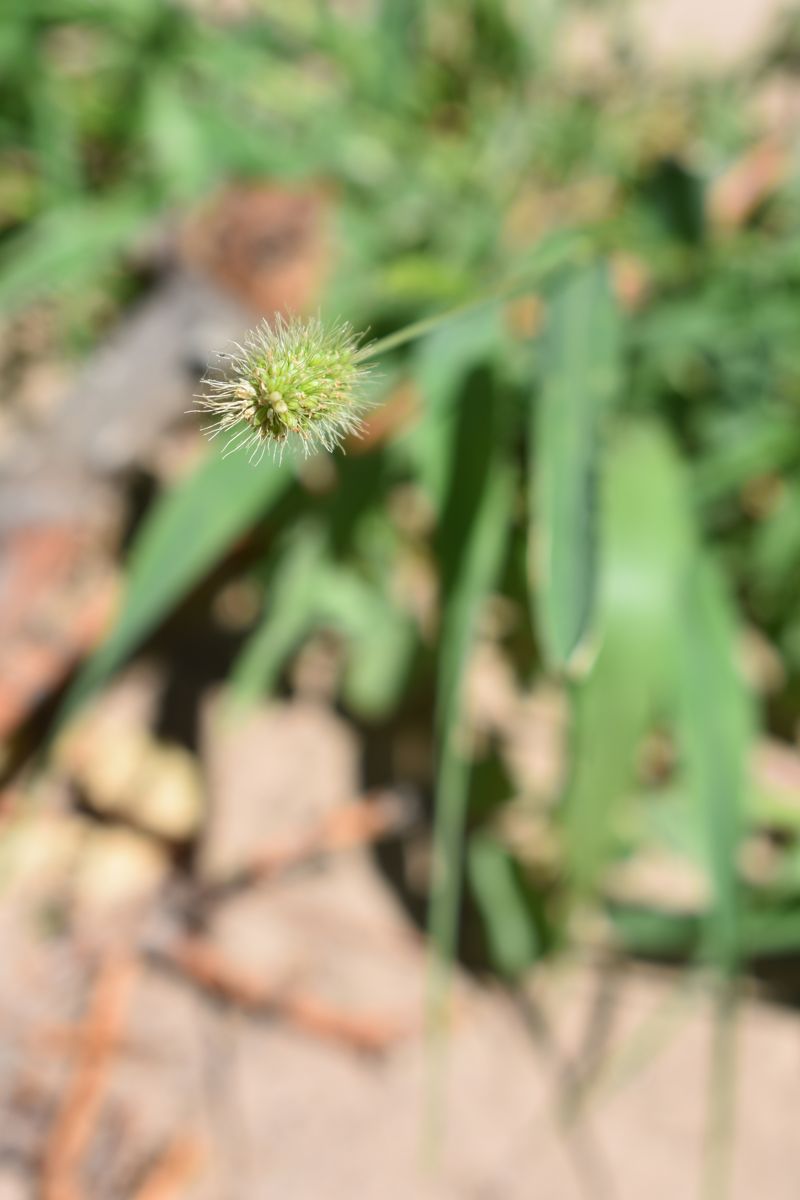
Silverleaf nightshade, eggplant, desert horse purslane, and green bristlegrass all present much the same way to a hand and an unaided eye: pale, soft-looking, slightly grippy. Four plants, one adjective.
The adjective is doing all the work, and it is hiding the entire finding.
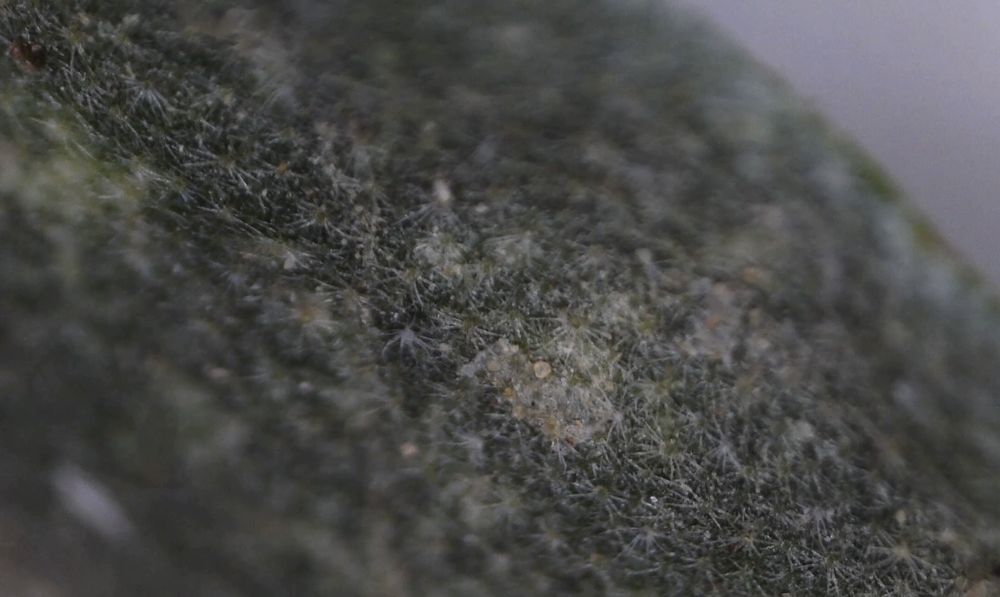
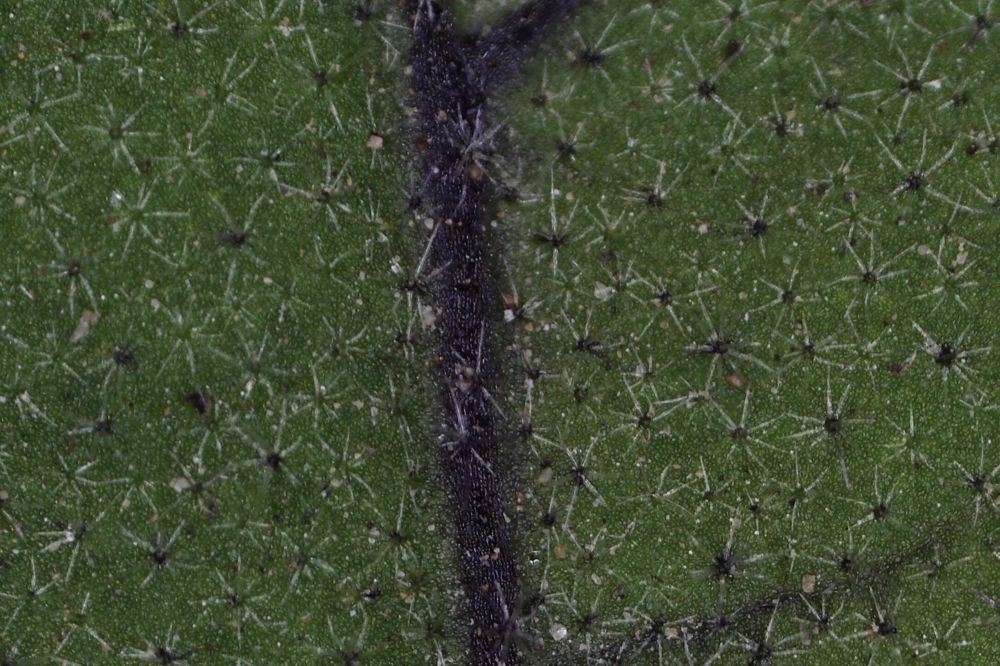
Under magnification the four surfaces share almost nothing: not the cell type, not the coverage pattern, not the material, not what the structure is optimizing for.
A trichome can branch into dead reflective arms or balloon into a living reservoir. The grass skipped cells altogether and made glass. Two of the four are running stellate trichomes: a single epidermal cell differentiated into arms radiating from a hub. The arms lose their cytoplasm at maturity, leaving a lignified wall around an air-filled lumen.
| Observed | Nightshade | Eggplant | Purslane | Bristlegrass |
|---|---|---|---|---|
| Structure | stellate | stellate | dome | silica body |
| Material | lignified wall | lignified wall | cuticle + fluid | amorphous silica |
| Coverage | continuous felt | discrete stars | continuous field | rows on veins |
| Pigment | none seen | anthocyanin at base | none seen | none seen |
| Surface feel | soft, felted | soft, catching | leathery, grippy | rough one way |
All fields observed directly. "Dome" is deliberately non-committal; see section 03.
The density difference between the two Solanums maps cleanly onto where they live. Nightshade survives Chihuahuan Desert summers unirrigated and runs its trichomes into an unbroken mat. Eggplant has been bred for centuries under irrigation, where water conservation was never the selection pressure, and its stars sit apart, with green epidermis showing between them.
The eggplant spends its budget somewhere else entirely: pigment. The dead arms read silver in both species because that color is structural, not chemical. But eggplant's living basal cells are loaded with anthocyanin, patchily, cell by cell, some dark purple and some pale, sitting right next to each other.
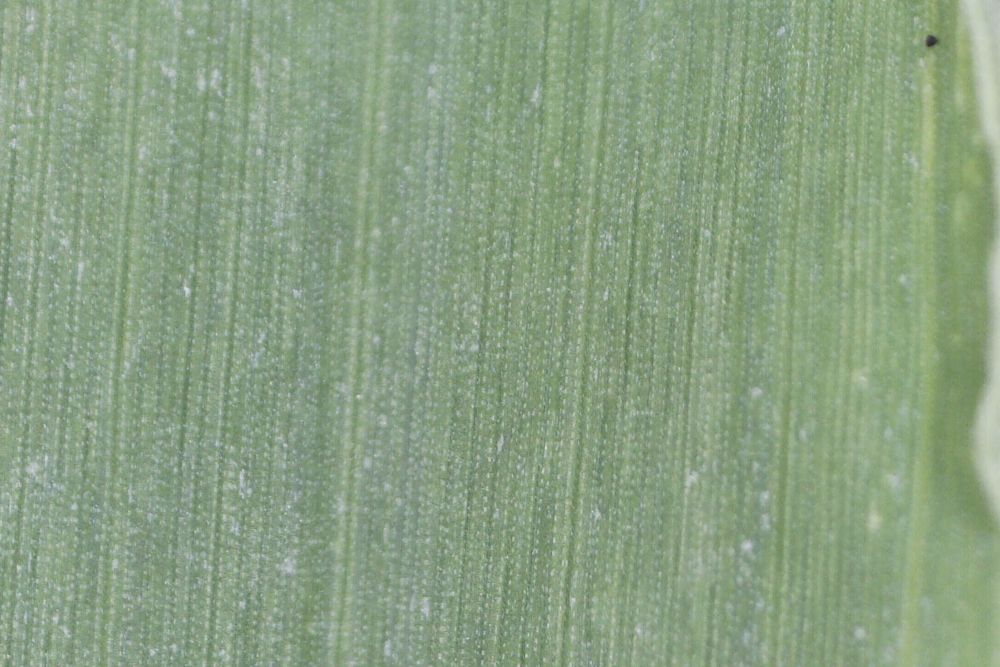
The grass refuses the whole premise. Green bristlegrass doesn't build a structure out of cells at all. It deposits amorphous silica inside them, in regular rows following the veins, turning its epidermis into something closer to sandpaper than to tissue. That is a defense that works by abrading mouthparts rather than by blocking access, and it is cheap, which matters enormously for an annual weed that has to flower before the water runs out.
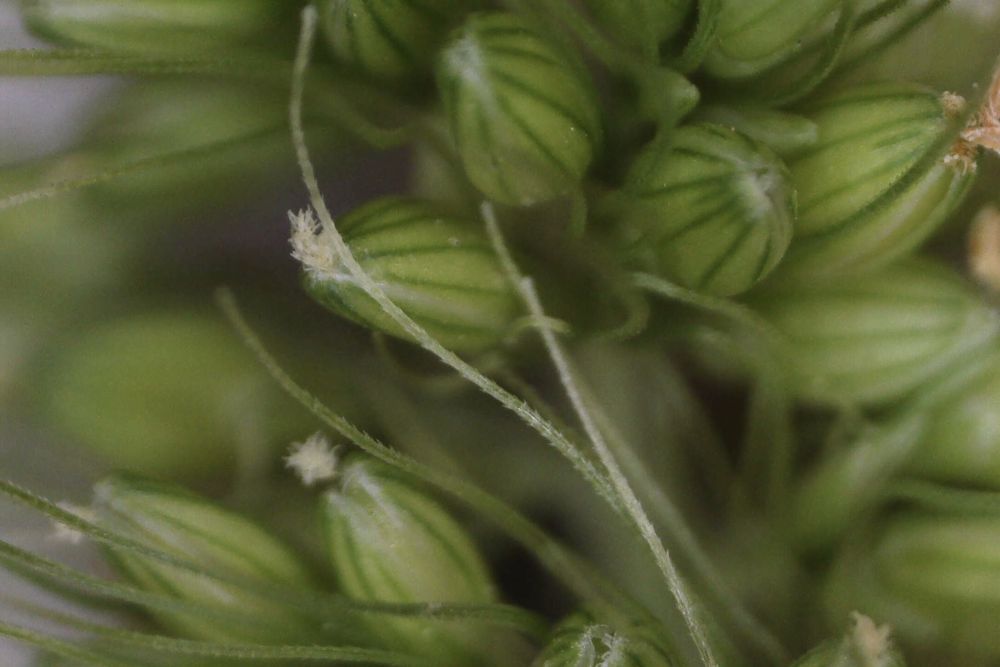
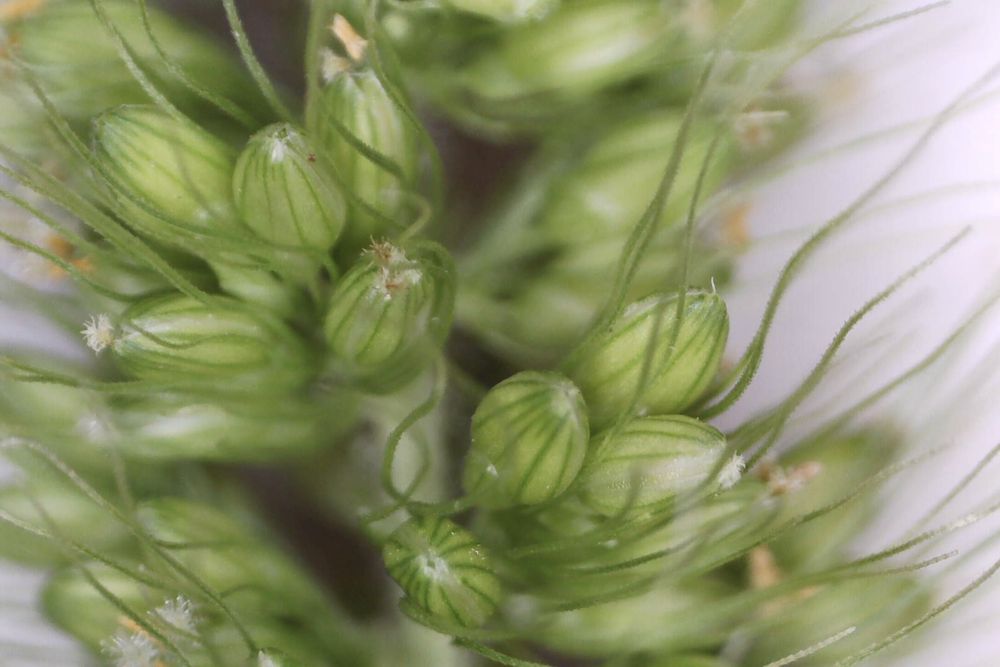
Its flower makes the same argument from the other direction. The long filaments around each spikelet are not awns and are not attached to the seed: they are sterile branches, spikelets that never developed. Feathery stigmas, dangling anthers, no petals, no scent, no nectar. Nothing on that inflorescence is aimed at an animal. It is built entirely for wind.
Morphology said one thing. Touch said the opposite. Only breaking something settled it. Desert horse purslane is in Aizoaceae, the ice plant family, whose famous member is the model organism for epidermal bladder cells. The domes looked like textbook bladders, so I called them bladders.
Then I touched it. Real bladder cells are fragile and rupture under a fingertip. This surface was leathery and held its shape, behaving like a solid, not a balloon. So I revised to papillae: epidermal cells protruding under a thick cuticle, no fluid involved.
| Evidence | Read | Contradicted by |
|---|---|---|
| Family and morphology | bladder cells | texture |
| Texture under pressure | papillae | rupture test |
| Rupture test | fluid, reinforced wall | nothing yet |
Texture reported on wall construction. I read it as reporting on contents.
Pressing hard enough to burst a few cells turned that patch dark green, and the domes were still visibly there. Nothing had been destroyed. Released fluid had flooded the air gaps between the structures, replacing air at n ≈ 1.0 with sap at n ≈ 1.33, close enough to the cuticle that light stopped scattering and passed straight through to the mesophyll. So: fluid-containing, but with a wall tough enough to resist a fingertip. An intermediate the two textbook categories don't have a name for.
The silvery white was never pigment. It was air.
A dense trichome mat can absorb water or repel it, and the literature splits by species. One droplet decides it: bead up and the mat is hydrophobic, so its water story is dew nucleation rather than uptake. Wick in and it's the opposite plant.
Bladder cells sit on a narrow stalk above the epidermis. Papillae are continuous outward bulges of the epidermal cell itself. One cross-section through a leaf edge shows which, and closes an ID that two other lines of evidence could not.
The white rows on the bristlegrass blade are either mineral or wax, and at this magnification they look identical. Alcohol dissolves wax and leaves silica untouched: the same class of one-move test that settled the purslane, run on a different material.
Skills applied Macro documentation · comparative morphology · manipulation testing · structure-function mapping · optical mechanism · design translation. Literature cross-referenced with AoB PLANTS, Proc. R. Soc. B, J. Forestry Research, and Frontiers in Plant Science.
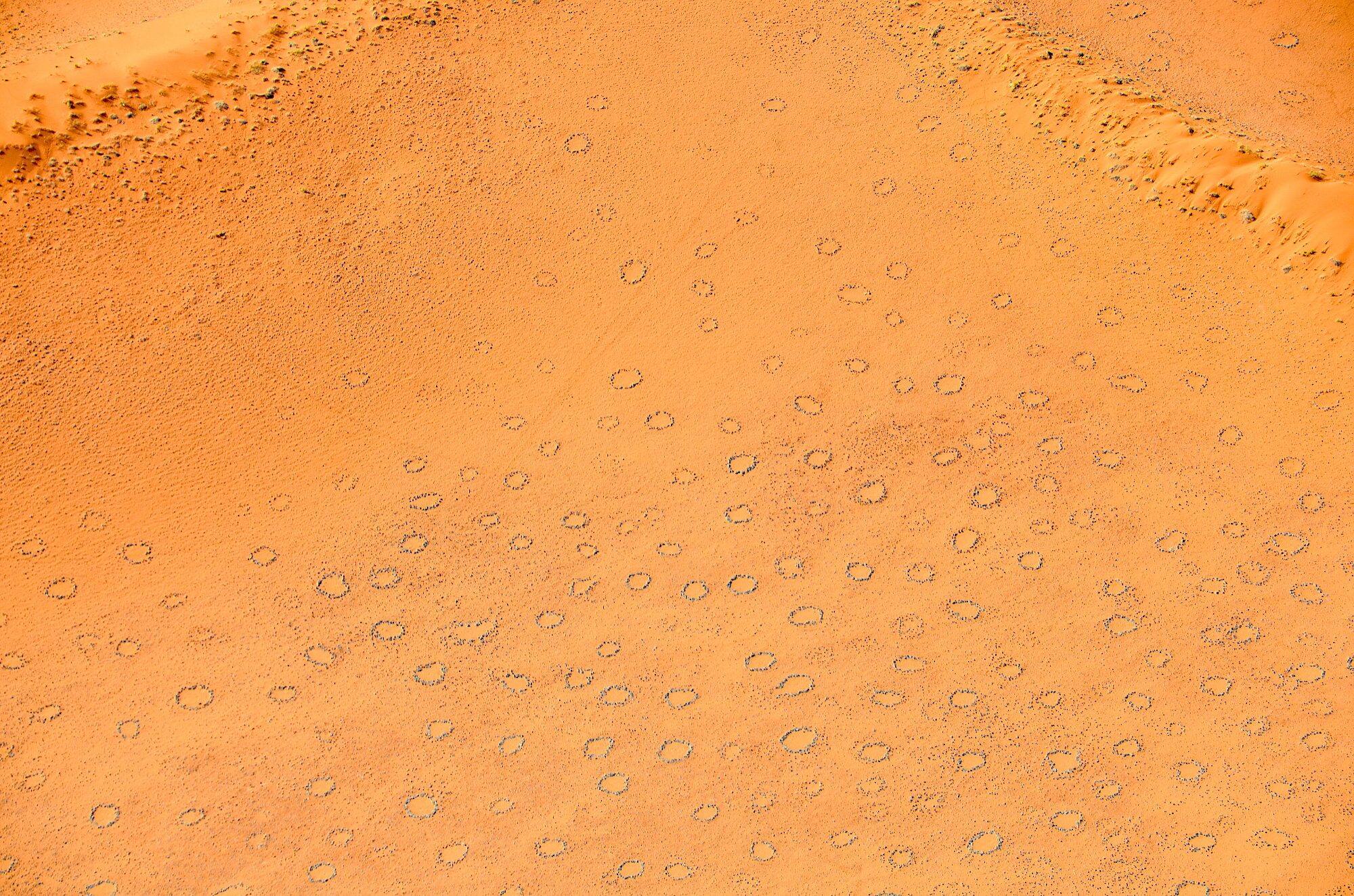
Fairy circles are self-organizing vegetation patterns where simple local interactions generate complex, repeating, scaling patterns.
 1a · Observed
Fairy circles are self-organizing vegetation patterns where simple local interactions generate complex, repeating, scaling patterns. In arid grasslands, uniform vegetation on flat terrain destabilizes into regularly spaced bare patches due to water scarcity. Scientists use the Neighborhood Density Function g(r) to analyze circle spacing to see if it is random or homogenous. In Australia, a strong g(r) peak at 10 meters with 6 neighbors confirms hexagonal spacing and the (role of scale-dependent feedback). Pattern form at landscape scale, depend on soil type (porous sand vs. hard clay), water transport (diffusion vs. overland flow), and mean annual precipitation.
Namibian mechanism (resource competition and facilitation). Peripheral grasses compete for water by extending roots into center gap sands with high infiltration rates. Center gaps retain moisture acting as a reservoir to surrounding vegetation matrix. A positive feedback loop of soil-water diffusion maintains the anti-phase distribution of biomass and water.
Australian mechanism (infiltration feedback and overland water flow). Fairy circles form on hard clay pans with low infiltration. Center gap runoff nourishes surrounding grasses with confined roots able to quickly take in water. A positive feedback loop with overland water flow maintains the in-phase distribution of biomass and water.
Hub-and-spoke/hexagonal spacing based on available resources and local resonance.
In a hexagonal pattern, each node (or element, like a grass clump, person, or resource hub) is surrounded by six equidistant neighbors. This even spacing reduces competition because no receiving agent/element is closer to the resource than any other receiving agent; each receiver shares the same buffer zone. In social systems, this could mean fairer access to healthcare, food, clean water, or transportation, because no single community dominates the central node.
Analyze feedback loops at both local and system-wide scales to guide the stable distribution pattern of agents and resource pools or pulses based on supply, demand and capacity to absorb supply. Enable self-organization that balances individual needs with collective resource availability.
Skills applied Literature review · spatial pattern analysis · mechanism comparison · evidence grading · design abstraction · scientific illustration · live modeling.
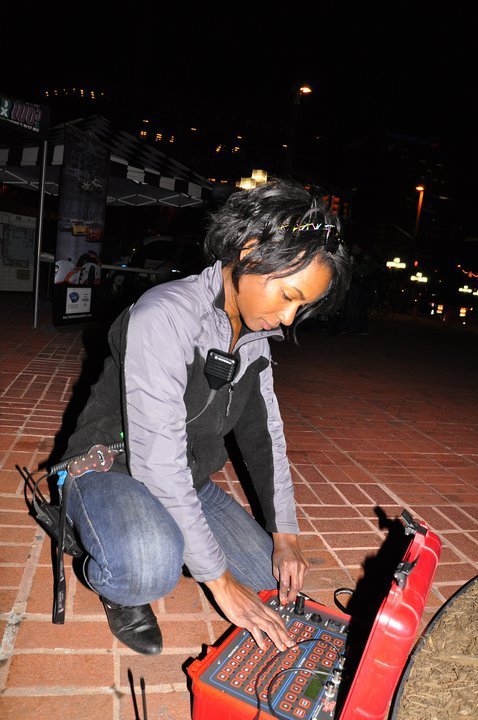 Pyrotechnicsfiring a live showPhotonicsoptics bench work
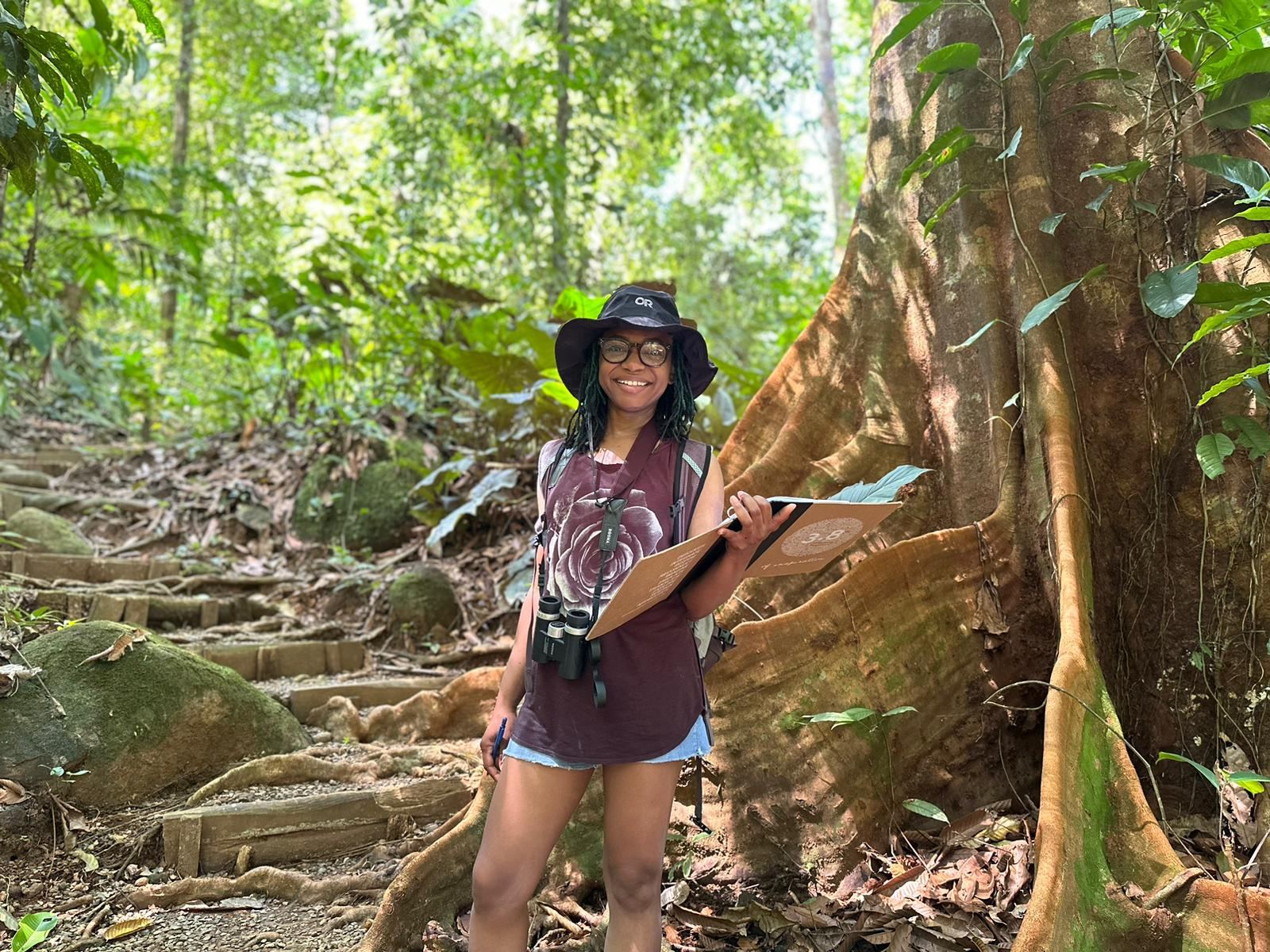 Photosynthesisbiomimicry fieldwork
Genell Zuciya is a creative technologist, inventor, biomimicry professional, and experiential creative director with nearly two decades of work across Walt Disney Imagineering, Netflix, and Meow Wolf. She specializes in large-scale immersive design, innovation strategy, and concept-to-deployment development at the intersection of technology, storytelling, and systems thinking.
She holds a Master's in Biomimicry and has done fieldwork in over six ecosystems. As the founder of Nexus Lab Space, Genell is always looking for collaborators in experiential innovation and human-centered design.
Most clients begin with a framing sprint. It delivers real value on its own and gives us a clear, shared picture of where to go next.
A focused engagement to define the challenge and bring back the biology.
An ongoing role inside your team or program, scoped by the month or the project.
Nature-informed products and digital platforms, including AI-enabled tools.
Talks, workshops and guided nature hikes are available on request, for all ages. We come to elementary schools, corporate offices, nature centers and more.
It is the practice of solving design problems by studying how organisms and ecosystems meet the same need, then translating the underlying principle, not the look, into a product, process, or program. The systems part means we design for the feedback loops and people around the thing, not only the thing itself.
No. Phase 02 does that work and translates it into design principles in your language. Your team brings the domain knowledge; we bring the biology and the process that connects them.
No. The same process works for services, learning programs, public spaces, and how resources move through a community. Track B exists for exactly that.
Yes. If you already have a frame, we can start at Phase 02 or 03. If a project has stalled, a short framing sprint is often the fastest way to unstick it.
The studio is based in New Mexico and works with clients anywhere. Framing and research run well remotely; prototyping and field testing happen on site when they need to.
Tell us the challenge in a few sentences. You will hear back personally within a few business days.
